

The oldest tree on earth is an unnamed Great Basin Bristlecone Pine in the high mountain ranges of California and Nevada, verified at over 5,100 years old through tree-ring counting. We know this because each ring in its trunk represents exactly one year of growth. Researchers extract pencil-thin core samples without felling the tree, then count every ring—a process called dendrochronology that achieves precision to within a single year.
That answer comes with a crucial caveat: we’re talking about individual trees grown from a single seed. If you count clonal colonies—genetically identical trunks sprouting from one shared root system—the record shatters. A quaking aspen clone in Utah called Pando may be 80,000 years old, though no single trunk in that forest has lived more than a few hundred years. The distinction matters, and most popular sources blur it.
The tree you’ve heard of isn’t the oldest
For decades, the most famous ancient tree was Methuselah, a bristlecone pine in California’s White Mountains, verified at roughly 4,850 years old by the USDA Forest Service. Its exact location has been kept secret since the 1960s—publication invites damage from foot traffic that compacts fragile soil and carves into bark that took centuries to grow.
But Methuselah isn’t the record holder. At least two other bristlecones have been verified older: one discovered in 1964 measured 5,065 rings, and another specimen surpassed 5,100 years. Researchers keep the current oldest tree’s location and verified age unpublished for the same reason they guard Methuselah. These trees are irreplaceable, and publicity brings risk.
Methuselah remains famous not because it’s the oldest, but because it was the first bristlecone widely recognized as ancient, and because its name gave the public a story to anchor to. The unnamed older specimens are just as real—just harder to mythologize.
How we know a tree’s age to the single year
Tree-ring counting sounds simple—cut a cross-section, count the circles—but bristlecone pines make it possible without killing the tree. Researchers use an increment borer, a hollow drill that extracts a pencil-thin core sample from bark to center, leaving the tree intact.
Each ring represents one year. Wide rings mark years with abundant moisture; narrow rings emerge from drought or extreme cold. By measuring ring widths and matching patterns across multiple samples, dendrochronologists at institutions like the University of Arizona’s Laboratory of Tree-Ring Research can verify ages and reconstruct climate conditions year by year, stretching back thousands of years.
Bristlecone pines are ideal for this work because they grow extraordinarily slowly in harsh, high-altitude environments—sometimes adding only half a millimeter of ring width per decade. Their wood is dense and resinous, resisting rot and insects even after parts of the tree die. A single bristlecone may survive with only a narrow strip of living bark, while the rest of its trunk remains preserved for millennia, rings intact and countable.
For complete core samples, precision reaches ±1 year. If a core misses the center or captures only part of the tree’s lifespan, researchers estimate missing rings by cross-referencing growth patterns from nearby trees, which can introduce uncertainty of ±10 to 50 years for the very oldest specimens.
Why bristlecone pines live so long
The secret isn’t genetic invincibility—it’s location and strategy. Great Basin Bristlecone Pines grow at 9,000 to 11,000 feet elevation in extreme environments: minimal precipitation, intense cold, and nutrient-poor rocky soil. Minimal rainfall means minimal competition from faster-growing species. Thin air and harsh conditions force bristlecones to grow slowly, conserving resources.
Slow growth produces dense, resinous wood that resists decay. When branches die or the trunk sustains damage from wind or lightning, the tree doesn’t waste energy healing it—it simply isolates the damaged section and continues growing from surviving bark. Some ancient bristlecones are more deadwood than living tissue, sustained by a single strip of bark spiraling up the trunk to a few surviving branches.
Deep root systems tap moisture from bedrock, enduring droughts that would kill other species. The harsh climate also limits threats: few insects, little competition, and cold temperatures that slow the biological processes driving aging.
In short, bristlecones live long because they grow in places where almost nothing else survives.
The clonal twist: when “oldest” depends on your definition

If the question becomes “oldest living organism” rather than “oldest individual tree,” bristlecones lose decisively. Pando, a quaking aspen clone sprawling across 43 hectares in Utah, consists of roughly 40,000 individual stems—all genetically identical, all rooted to a single ancient root system. University of Utah researchers estimate Pando’s age at 80,000 years or more, meaning the organism has persisted since before the last ice age ended.
But Pando isn’t a tree in the traditional sense. Each trunk lives only a few hundred years before dying and being replaced by new shoots from the same roots. The genetic individual persists; individual trunks do not. If you’re asking “what tree has stood in one place longest,” the answer remains a bristlecone.
Other clonal organisms stretch the record further. An unnamed Alerce clone in southern Chile may exceed 16,000 years. Posidonia oceanica, a Mediterranean seagrass meadow, has been argued as potentially 100,000 years old based on genetic analysis—though calling seagrass a “tree” strains the definition.
The distinction matters because popular sources often list Pando’s 80,000 years alongside Methuselah’s 4,850 as if they’re comparable. They’re not. One is a single trunk from a single seed; the other is a genetic network that survives by constantly replacing its above-ground parts.
Global contenders: the oldest verified trees
Bristlecone pines dominate ancient tree records, but other species rival them:
Alerce (Fitzroya cupressoides), native to southern Chile’s temperate rainforests, holds second place among verified individual specimens. The oldest ring-counted Alerce exceeds 3,600 years. Like bristlecones, Alerce grow slowly in extreme conditions—cold, wet, high-altitude forests—and produce dense, decay-resistant wood.
Great Basin Juniper (Juniperus oxycedrinus) in the southwestern United States includes specimens exceeding 3,000 years, though dating is less reliable than bristlecones due to irregular growth patterns.
Mediterranean Cypress (Cupressus sempervirens) around the Mediterranean and in Iran are often claimed to reach 4,000 years, but most lack published ring-count verification. Some “ancient” specimens are regrowth from stumps of earlier trees, complicating age claims.
Olive trees in the Mediterranean occasionally claim ages of 2,000 to 3,000 years, though many are coppiced (cut and regrown from old roots), blurring the line between individual age and clonal persistence.
The pattern is clear: the oldest trees cluster in extreme climates—high altitudes, arid regions, or cold rainforests—where slow growth and harsh conditions favor longevity over reproduction.
What we can’t know—and why
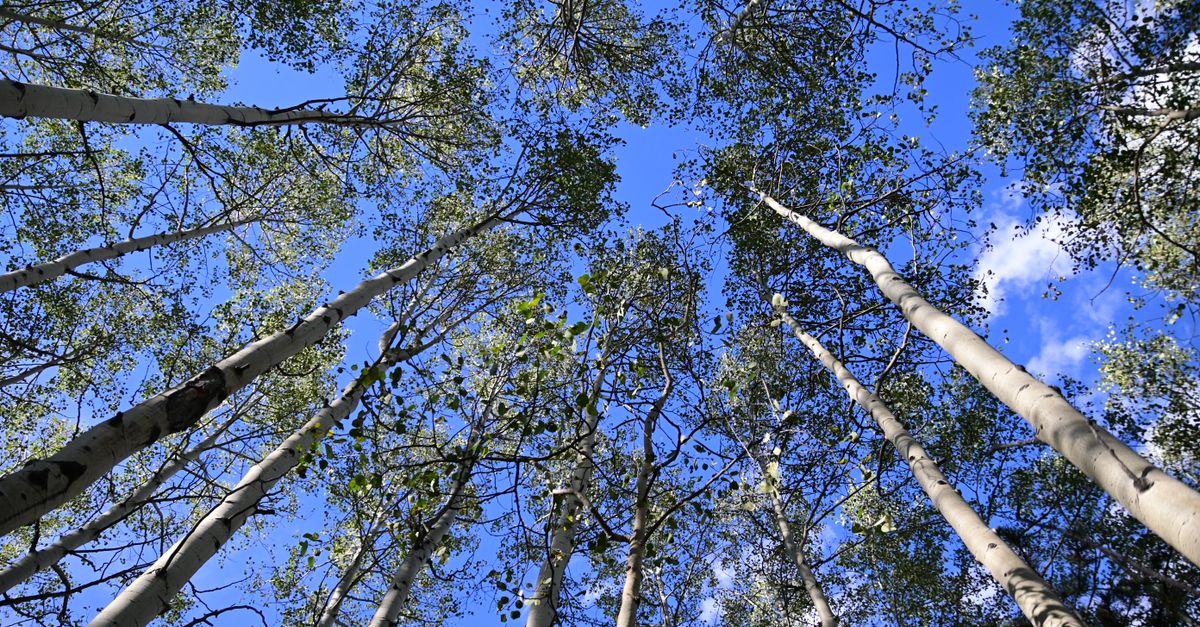
The exact age of the current oldest bristlecone remains unpublished. Researchers know it, but keep the location secret for the same reason Methuselah’s coordinates are withheld: even well-intentioned visitors compact soil, break fragile roots, and damage bark that took centuries to grow.
This creates an odd situation where the record holder is both known and unknowable. We have the verified age, the ring count, the documentation—but we can’t visit, photograph, or even confirm the tree still stands. For all we know, it may have added another century of rings since first measurement in the 1960s, pushing past 5,200 years.
There’s also the question of measurement error. While dendrochronology is precise, the oldest bristlecones sometimes have incomplete core samples—either the borer couldn’t reach the center, or the center has rotted away over millennia. Researchers estimate missing rings by comparing growth rates from similar trees, adding uncertainty of ±50 years to the final count.
Finally: are there older trees we haven’t found? Bristlecone groves in Nevada and California have been surveyed extensively, but remote high-altitude forests in the Andes, Himalayas, or Siberia remain less studied. An older specimen might exist in an equally harsh, overlooked corner of the world.
Why this matters
Knowing the age of the oldest trees isn’t mere record-keeping. These ancient organisms are living climate archives. Each ring in a 5,000-year-old bristlecone captures a year of conditions: droughts, volcanic eruptions that dimmed the sun, temperature shifts too subtle for written records. By cross-referencing overlapping samples from living and dead bristlecones, researchers have built continuous tree-ring chronologies stretching back over 8,000 years—an unbroken environmental record more precise than any other natural archive.
Bristlecone pines also reveal a quiet truth: longevity is often the prize for surviving where no one else wants to live. The oldest trees on earth grow in soils too poor, climates too harsh, and altitudes too extreme for faster, more competitive species. They don’t dominate their ecosystems; they outlast them.
There’s something astonishing about the fact that a tree alive today was already ancient when the pyramids were built, already old when Rome fell, already a survivor when Europeans first reached the Americas. The oldest tree on earth has lived through the entire span of recorded human history—and it’s still growing.
Written for general interest and accuracy-checked against USDA Forest Service records, University of Arizona dendrochronology research, and peer-reviewed studies of ancient tree records.
For more on clonal organisms and other ancient living things beyond individual trees, see What Is the Oldest Living Organism on Earth?.