

Somewhere in California’s White Mountains, a bristlecone pine named Methuselah has been alive for roughly 4,850 years. It was already ancient when the pyramids were built. But here’s the twist: whether Methuselah is the oldest living organism on Earth depends entirely on how you define “organism.”
This article covers the longest living species and ancient organisms that hold longevity records — from individual trees to sprawling clonal colonies that blur the line between one organism and many. The answers are stranger and more wonderful than you’d expect.
1. The Individual Champion: Methuselah the Bristlecone Pine
Age: ~4,850 years (and counting)
Location: Inyo National Forest, California (exact location protected)
Methuselah germinated around 2830 BCE, during the Bronze Age, and has been growing — slowly, stubbornly — ever since. It is the most famous of the Great Basin bristlecone pines, a species that thrives in conditions most plants would consider lethal.
Bristlecone pines hold the record for the oldest known individual organisms. An unnamed bristlecone discovered in 2012, also in the White Mountains, is estimated at over 5,000 years old, though its exact location remains secret to prevent damage from visitors. These trees don’t just survive; they seem built to outlast civilizations.
What makes them remarkable isn’t just their age but their resilience. A bristlecone can be more than 50% dead wood and still produce new growth from a thin strip of living bark. They grow at elevations above 10,000 feet, in rocky, nutrient-poor soil where almost nothing else competes. Their wood is so dense and resinous that it resists rot and insects for millennia.
For a closer look at organisms that defy expectations, consider how bristlecone pines belong in any collection of nature’s most unlikely survivors.
2. The Clonal Giant: Pando
Estimated Age: ~80,000 years
Location: Fishlake National Forest, Utah
Type: Quaking aspen clonal colony
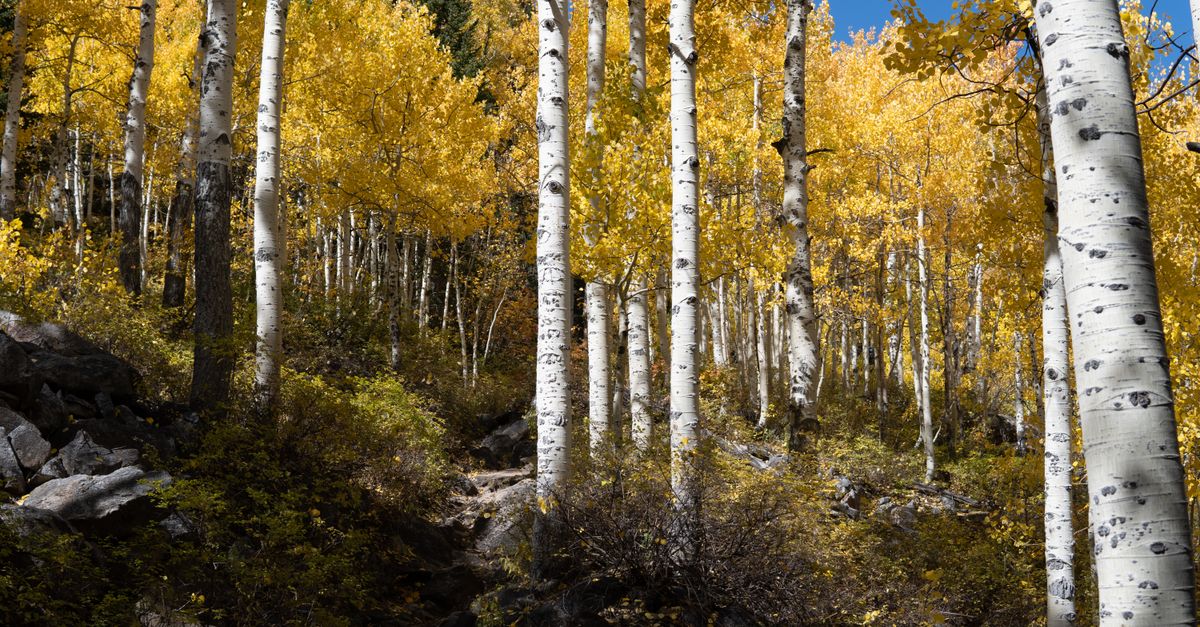
If you’re asking about the oldest connected organism, the answer shifts to Pando — a quaking aspen grove in Utah that looks like a forest but is genetically one individual. Pando (Latin for “I spread”) consists of roughly 40,000 stems sprouting from a single root system. The entire colony weighs about 6,600 metric tons, making it one of the heaviest organisms on Earth.
Here’s the catch: each individual stem above ground lives only 100–150 years. What’s ancient is the root system itself, which has been cloning new stems for an estimated 80,000 years. Some studies suggest it could be even older — estimates range from 40,000 to over 200,000 years depending on the dating method used.
Is Pando one organism or many? Botanically, it’s one. Every stem shares the same DNA, and they’re all physically connected underground. But the definition gets fuzzy when individual parts die and regenerate constantly. Pando is less like a single tree and more like a living network that’s been repairing itself since the last ice age.
3. King’s Lomatia: Tasmania’s Ancient Clone

Estimated Age: ~43,600 years
Location: Southwest Tasmania, Australia
Type: Clonal shrub
Far less famous than Pando but equally astonishing, King’s Lomatia is a clonal shrub found only in a small, fragmented population in Tasmania. Radiocarbon dating of its genetic material suggests it has been cloning itself for over 43,000 years.
Unlike Pando’s sprawling forest, King’s Lomatia is a modest shrub, rare and endangered. It reproduces only by suckering — sending up new shoots from its root system — because it’s sterile and can’t produce seeds. Every plant in the population is genetically identical, a living fossil from the Pleistocene.
King’s Lomatia is a reminder that age doesn’t always come with size or grandeur. Some of the oldest living things are small, isolated, and holding on by a thread.
4. How Scientists Know Their Ages
Counting the years on an ancient organism isn’t as simple as asking it politely. Scientists use two primary methods:
Dendrochronology (tree-ring dating): For bristlecone pines, researchers count annual growth rings visible in the wood. Each ring represents one year. In harsh, high-altitude environments, these rings can be incredibly narrow — some less than a millimeter thick. The USDA Forest Service confirmed Methuselah’s age by carefully extracting core samples and cross-referencing ring patterns with other trees. The margin of error is roughly 50–100 years for very old specimens.
Radiocarbon dating and genetic analysis: For clonal organisms like Pando and King’s Lomatia, radiocarbon dating estimates the age of the root system or older wood. Genetic mutation rates also help estimate how long a clone has been reproducing without sexual reproduction. These methods have wider margins of error — up to 1% for radiocarbon, which translates to hundreds or thousands of years for very old organisms.
The key takeaway: these ages are estimates, not exact counts. Science gives us the best answer available, but there’s always uncertainty.
5. What Makes Bristlecone Pines Nearly Immortal
Bristlecone pines survive where most plants can’t, and that’s the secret. They grow at 9,000 to 11,000 feet in the White Mountains and Great Basin, where temperatures plunge to −20°F to −40°F in winter, annual precipitation barely reaches 10–20 inches, and the soil is rocky and nutrient-starved.
In these conditions, bristlecones grow excruciatingly slowly — sometimes just one inch in diameter per 100 years. Slow growth means dense, rot-resistant wood. Their resin-heavy bark repels insects and fungi. Because they grow where almost nothing else does, they face minimal competition for resources.
Most remarkably, bristlecone pines can survive partial death. A tree can lose most of its bark and heartwood to wind, ice, and time, yet continue living through a narrow strip of cambium — the thin layer of living tissue just under the bark. Some bristlecones are more dead than alive, yet they endure.
It’s a strange kind of immortality: not invulnerability, but resilience through scarcity.
How We Define “Oldest”
The answer to “what is the oldest living organism on Earth” hinges on what you mean by “organism.”
If you’re asking about the oldest individual — a single, genetically unique being that has grown continuously without splitting or cloning — the answer is a bristlecone pine, either Methuselah or the unnamed 5,000-year-old specimen.
If you’re asking about the oldest continuous genetic lineage — an organism that has persisted by cloning itself — the answer is Pando, King’s Lomatia, or possibly another clonal colony we haven’t discovered yet.
Both definitions are scientifically valid. Bristlecone pines are individual trees; Pando is a networked colony of genetically identical stems. They represent different strategies for longevity, and both are extraordinary.
One more caveat: these are the oldest known organisms. There may be older bristlecone pines in remote mountains, older clonal colonies hidden in forests, or ancient organisms we simply haven’t found yet. Science can only confirm what it’s discovered.
Frequently Asked Questions
How old is Methuselah?
Methuselah is approximately 4,850 years old, confirmed through dendrochronology (tree-ring counting) by the USDA Forest Service. Its age increases by one year annually, and its exact location is kept secret for protection.
What is the oldest tree in the world?
The oldest known individual tree is an unnamed bristlecone pine in California’s White Mountains, estimated at over 5,000 years old. Methuselah, at 4,850 years, is the most famous. Both are Great Basin bristlecone pines.
Is Pando older than bristlecone pines?
Yes, if you’re measuring by root-system age. Pando’s root network is an estimated 80,000 years old. However, Pando is a clonal colony — its individual stems live only 100–150 years. Bristlecone pines are older as individual organisms.
How do scientists count the age of ancient trees?
Scientists use dendrochronology: counting annual growth rings in the wood. For very old trees, they extract thin core samples to avoid damaging the tree. Each ring represents one year of growth. Cross-referencing ring patterns with other trees increases accuracy.
Can organisms live forever?
No known organism lives forever. Bristlecone pines can live over 5,000 years, and clonal organisms like Pando can persist for tens of thousands of years by regenerating, but all living things eventually face limits imposed by disease, environmental change, or catastrophic events.
What makes bristlecone pines live so long?
Bristlecone pines grow in harsh, high-altitude environments with little competition. Their extremely slow growth produces dense, rot-resistant wood. They can survive with most of their trunk dead, living through a narrow strip of bark. These adaptations make them extraordinarily resilient.
Is Pando technically one organism or many?
Botanically, Pando is one organism. All 40,000 stems share identical DNA and are connected by a single root system. However, individual stems die and regenerate independently, so the definition depends on whether you emphasize genetic identity or physical continuity.
The oldest living organisms on Earth are bristlecone pines if you mean individuals, or clonal colonies like Pando if you mean connected networks. Both answers are correct — and both are reminders that life finds ways to endure far longer than we’d imagine.
Written for general interest and accuracy-checked, but not a substitute for specialist sources.