

Buried beneath the Arctic tundra sits roughly 1,700 gigatonnes of frozen carbon—about twice the amount of carbon currently circulating in Earth’s atmosphere. That carbon has been locked in frozen ground for thousands of years. It’s starting to thaw.
The short answer
Permafrost is soil, rock, or sediment that stays frozen for at least two consecutive years. It’s melting because the Arctic is warming 2–3 times faster than the rest of the planet, a phenomenon called Arctic amplification. As permafrost thaws, microbes break down the long-frozen organic matter inside it, releasing methane and carbon dioxide—which causes more warming, which causes more thaw. It’s a feedback loop, and it’s already begun.
What permafrost actually is
Permafrost isn’t pure ice. It’s frozen ground—soil mixed with ice crystals, gravel, rock, and the remains of plants and animals that died centuries or millennia ago. The U.S. Geological Survey defines it as any ground that remains at or below 0°C (32°F) for at least two consecutive years, though much of it has been frozen far longer than that.
It exists across roughly 23% of the Northern Hemisphere’s land surface: vast swaths of Siberia, northern Canada, Alaska, Scandinavia, Greenland, and the Tibetan Plateau. Some permafrost is just a few meters deep. In places like Siberia, it extends more than 1,000 meters underground.
The top layer—called the active layer—thaws every summer and refreezes in winter. It’s typically 0.3 to 3 meters thick, depending on latitude and vegetation cover. Everything beneath that stays frozen year-round. Or it used to.
Why the Arctic is a warming hotspot
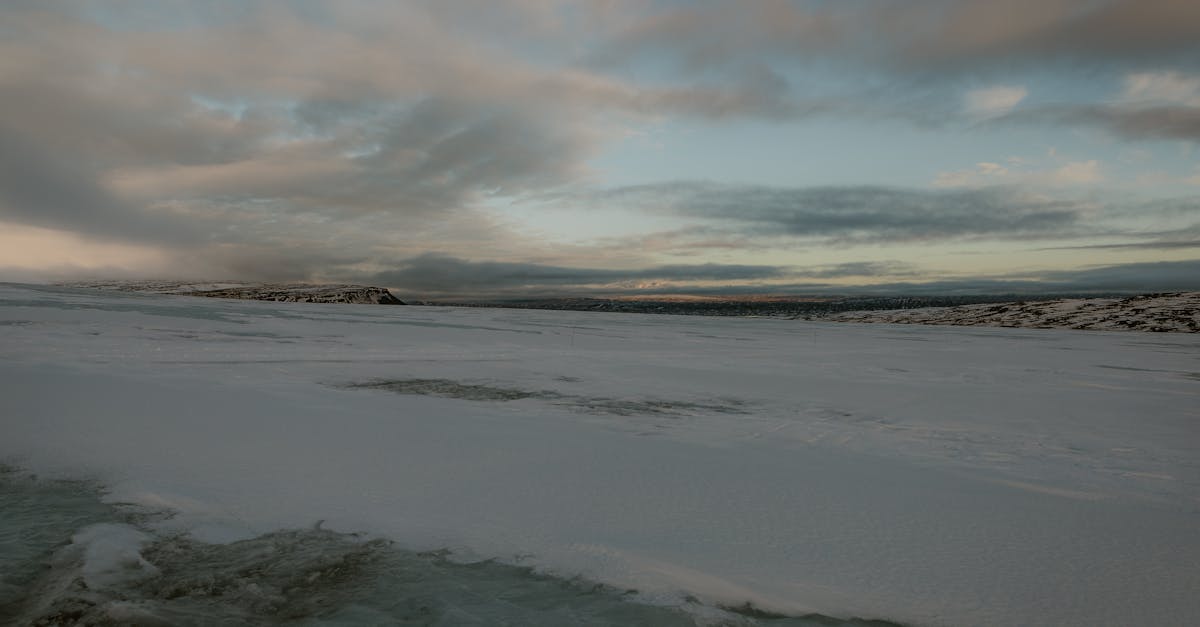
The Arctic isn’t warming at the same rate as the rest of the planet. It’s warming much faster—about 2 to 3 times the global average, according to the Intergovernmental Panel on Climate Change. This is called Arctic amplification, and it happens because of a cascade of feedbacks.
The biggest driver is the albedo effect. White ice and snow reflect sunlight back into space. When that ice melts, it exposes dark ocean water or bare ground, which absorbs heat instead of reflecting it. That absorbed heat warms the region further, melting more ice, exposing more dark surface, and so on.
Add to that: warmer air holds more water vapor, which is itself a greenhouse gas. Less sea ice means the ocean interacts more directly with the atmosphere, transferring heat. The result is a region that’s warming faster than anywhere else on Earth—and taking its frozen ground with it.
The feedback loop: why thawing permafrost amplifies warming
Here’s where it gets concerning. Permafrost doesn’t just contain soil and rock. It contains organic carbon—dead plants, animals, roots, peat, and microbes that froze before they could fully decompose. Research published in Nature Geoscience estimates that permafrost holds around 1,700 gigatonnes of carbon, roughly twice what’s currently in the atmosphere.
When permafrost thaws, microbes wake up and start breaking down that organic matter. If the ground is well-drained and oxygen-rich, the decomposition produces carbon dioxide. If the ground is waterlogged and oxygen-poor—common in thawing tundra—it produces methane, a potent greenhouse gas far more effective than CO₂ at trapping heat.
Both gases trap heat. That extra heat warms the Arctic further. That causes more permafrost to thaw. More thaw releases more carbon. The cycle reinforces itself. This is a positive feedback loop in the climate system, and it’s one of the most closely watched tipping points in climate science.
To be clear: we are not in a runaway methane apocalypse. The feedback is starting, not spiraling out of control. But scientists project that if global temperatures continue to rise, permafrost could release significant additional carbon by 2100—a significant fraction of the remaining carbon budget under a 2°C warming pathway.
Not all permafrost thaws the same way

It’s tempting to think of permafrost as a single thing that’s either frozen or melting. In reality, it varies wildly by region.
Ice-rich permafrost—found in parts of Siberia and Alaska—contains massive wedges of ground ice. When it thaws, the ground doesn’t just warm; it collapses, forming thermokarst landscapes: sinkholes, slumping hillsides, and drunken forests where trees tilt at odd angles because the soil beneath them gave way. This kind of permafrost thaws faster and releases more methane because the collapse often creates waterlogged conditions.
Ice-poor permafrost—common in mountainous regions and parts of northern Canada—has less ground ice. It thaws more slowly and tends to release more CO₂ than methane, since the ground stays better drained.
Coastal permafrost faces an additional threat: erosion. As sea levels rise and storms intensify, coastlines crumble, dumping frozen carbon directly into the ocean where it decomposes and releases greenhouse gases.
The thaw rate also varies significantly by region. Some regions are experiencing accelerated active-layer deepening. In hotspots—particularly in Siberia—thaw rates have increased notably in recent decades. The Arctic isn’t warming uniformly, and neither is its frozen ground.
What it means for the planet—and for us
The climate impact is the big one. Permafrost thaw is already contributing to atmospheric greenhouse gas concentrations, and that contribution will grow. Because it’s a feedback loop, it makes every other climate mitigation effort harder. Cutting emissions is essential, but even aggressive action won’t stop all permafrost thaw—some is already locked in by warming that’s already occurred.
There’s also a human cost. Tens of millions of people live in permafrost regions, mostly in Russia, Canada, and Alaska. Roads buckle. Buildings tilt and crack. Pipelines rupture. The ground people built on is no longer stable. For Indigenous communities in the Arctic, it’s not just infrastructure—it’s a way of life built around a landscape that’s fundamentally changing.
And there’s an odd historical footnote: thawing permafrost occasionally reveals remarkably preserved remains of Ice Age animals—woolly mammoths, cave lions, even ancient viruses frozen in the ice for tens of thousands of years. Scientists study them, but their release is a reminder of just how much is locked in that frozen ground.
FAQ
Where is permafrost found?
Permafrost exists across about 23% of the Northern Hemisphere’s land, concentrated in Siberia, northern Canada, Alaska, Scandinavia, Greenland, and the Tibetan Plateau. It’s also found in some high mountain ranges outside polar regions.
Is permafrost the same as glaciers or ice sheets?
No. Glaciers and ice sheets are masses of moving ice. Permafrost is frozen soil and rock—it contains ice, but it’s not made of ice. They respond to warming differently.
Can we stop permafrost from melting?
Not entirely. Some thaw is already inevitable because of past warming. But we can slow it significantly by cutting greenhouse gas emissions and limiting further temperature rise. The faster we act, the less permafrost thaws.
What happens to the land when permafrost thaws?
The ground subsides and destabilizes. In ice-rich areas, this creates thermokarst: collapsed ground, sinkholes, and tilted infrastructure. Buildings, roads, and pipelines built on permafrost are increasingly at risk.
Permafrost isn’t just a frozen curiosity at the edge of the map. It’s a massive carbon reservoir that’s starting to leak, and the mechanism driving that leak—Arctic amplification—is the same one making the region the fastest-warming place on Earth. Understanding why it’s melting means understanding the feedback loops that make climate change harder to stop once it’s in motion.
Written for general interest and accuracy-checked, but not a substitute for specialist sources.