

Right now, somewhere on Earth, about 20 volcanoes are erupting. Most aren’t making headlines—they’re doing what volcanoes have done for billions of years: releasing pressure from deep underground in bursts of molten rock, gas, and ash. But what actually triggers that release, and why do some volcanoes explode violently while others ooze lava like a slow leak?
The short answer
Volcanoes form where Earth’s crust is weak enough for molten rock to break through, usually at plate boundaries or volcanic hotspots. They erupt when pressure from dissolved gases in underground magma exceeds the strength of surrounding rock, forcing molten material to the surface.
Where volcanoes form: The three geologic settings
Volcanoes aren’t randomly scattered across the planet. Most volcanoes cluster at subduction zones, where one tectonic plate slides beneath another. As the descending plate sinks into the hot mantle, water and other volatiles trapped in the rock lower the melting point of surrounding material by roughly 200°C. This creates pockets of molten rock—magma—that’s less dense than solid rock and rises toward the surface.
The second setting is mid-ocean ridges, where plates pull apart. As mantle rock rises to fill the gap, decreasing pressure causes it to melt without any added heat—a process called decompression melting. This is where most of Earth’s volcanic activity happens, though we rarely see it: 80% of the planet’s volcanoes are underwater, erupting quietly on the seafloor.
The third setting is hotspots—stationary plumes of abnormally hot mantle material rising from deep in Earth’s interior. Hawaii, Yellowstone, and Réunion Island all sit above hotspots, far from any plate boundary. As tectonic plates drift over these plumes, chains of volcanoes form, which is why the Hawaiian islands get progressively older the farther northwest you go.
What magma is (and why it’s not the same as lava)
Here’s a distinction worth getting right: magma is molten rock underground, mixed with dissolved gases like water vapor, carbon dioxide, and sulfur dioxide. Lava is the exact same material once it reaches the surface. Same substance, different name. The gases dissolved in magma are the key to understanding eruptions—they’re what builds the pressure that eventually ruptures rock.
Think of it like a shaken soda bottle. The CO₂ is dissolved in the liquid under pressure. Crack the cap, and the pressure drops—gas comes out of solution violently. In a volcano, the “cap” is several kilometers of solid rock, and the dissolved gas is mostly water vapor. When that pressure exceeds the strength of the overlying crust, the volcano erupts.
Why volcanoes erupt: Pressure, volatiles, and rupture

The trigger for a volcanic eruption isn’t just “heat.” It’s pressure. Magma chambers—reservoirs of molten rock sitting 1 to 10 kilometers below the surface—fill slowly from below. As more magma enters, pressure builds. At the same time, dissolved gases in the magma expand as they rise toward lower-pressure zones, like bubbles forming in a pot of boiling water.
When the internal pressure exceeds the tensile strength of the surrounding rock—typically an increase of 0.1 to 10 megapascals, or roughly 1 to 100 atmospheres—the crust fractures. Magma rushes toward the surface, pressure drops further, and gases expand explosively. Depending on the magma’s composition, this can mean a steady lava flow or a catastrophic explosion.
The speed of that ascent varies widely: magma can rise anywhere from 0.1 to 10 meters per second depending on its viscosity and gas content. Low-viscosity basaltic magma (the kind in Hawaiian volcanoes) flows easily; high-silica rhyolitic magma (the kind that destroyed Pompeii) is thick, sticky, and traps gas bubbles until pressure becomes extreme.
The type of eruption depends on what’s melting
Not all volcanic eruptions look the same. The difference comes down to chemistry, viscosity, and how easily gases escape—which is why the same process produces three dramatically different outcomes:
| Eruption Type | Magma Viscosity | Gas Escape | Characteristics | Examples |
|---|---|---|---|---|
| Effusive | Low | Easy | Steady lava flow, low pressure release, lava moves at walking speed | Kīlauea (Hawaii), Stromboli (Italy) |
| Explosive | High | Trapped | Pressure builds to breaking point, pyroclastic flows, superheated ash clouds | Mount St. Helens (1980), Mount Vesuvius (79 AD) |
| Phreatic | Varies | Steam | Hot rock contacts groundwater, steam explosion, little or no new magma | Can occur in “dormant” volcanoes if conditions shift |
Effusive eruptions happen when low-viscosity, basaltic magma reaches the surface. Gas escapes steadily, and lava flows downhill at walking speed or slower. These are the eruptions you can watch from a safe distance—predictable, mesmerizing, and relatively manageable.
Explosive eruptions are the ones that reshape landscapes and make history. High-silica magma is so viscous that gas bubbles can’t escape. Pressure builds until the magma shatters into fragments—ash, pumice, volcanic bombs—and launches them skyward at supersonic speeds. Pyroclastic flows, superheated avalanches of gas and rock fragments, can race down a volcano’s flanks at 150 kilometers per hour and reach temperatures above 1,000°C.
Phreatic eruptions are steam explosions that happen when magma (or even just hot rock) contacts groundwater. No new molten rock reaches the surface, but the blast can still be deadly. These can occur in volcanoes considered dormant if underground conditions shift.
The myth of the “dormant” volcano
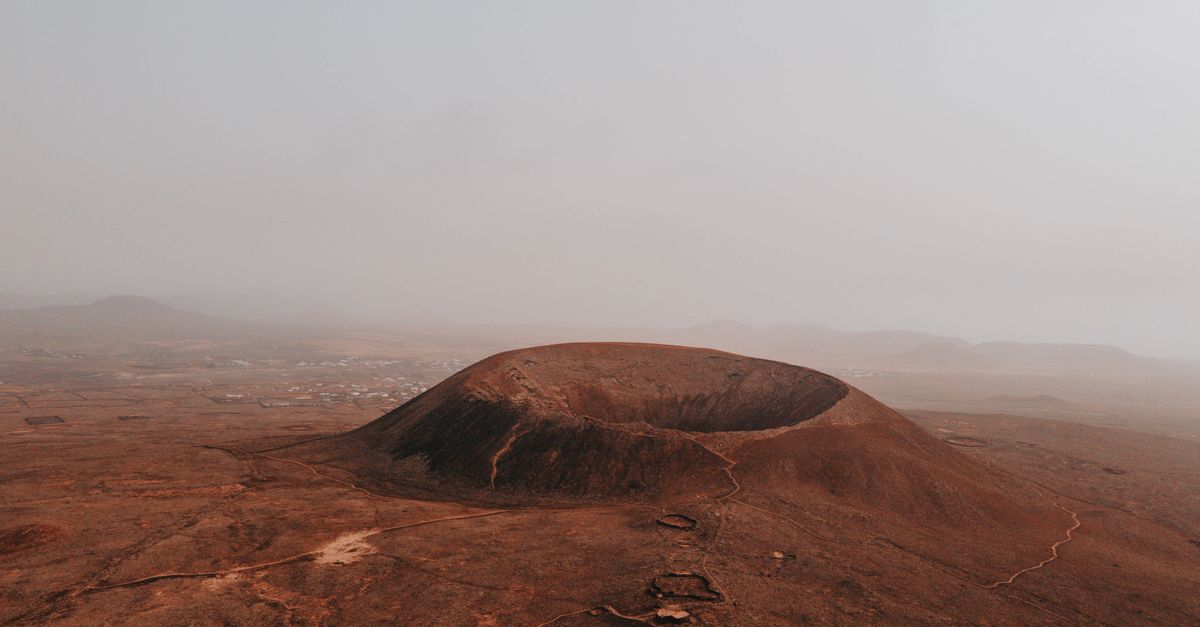
Here’s where popular coverage often goes wrong: dormancy doesn’t mean extinction. A volcano that hasn’t erupted in 50 years—or 500—can still be very much alive underground. Krakatoa was quiet for 135 years before its 1883 eruption, one of the deadliest in recorded history.
We can monitor precursors—seismic swarms, ground deformation, increased sulfur dioxide emissions—and often get days to weeks of warning before an eruption. But false alarms happen. A volcano showing all the signs of imminent eruption can settle back down without ever breaking the surface. The reverse is also true: some eruptions give almost no warning. Prediction is partial, not absolute, and that uncertainty is built into the science.
What actually kills people isn’t the lava
If you picture a volcanic disaster, you probably imagine rivers of glowing lava consuming towns. In reality, lava flows are slow enough that most people can outrun them. The real killers are pyroclastic flows—those superheated avalanches of gas and rock—and lahars, volcanic mudflows triggered when eruptions melt snow and ice on a volcano’s peak.
Pyroclastic flows from Mount Vesuvius buried Pompeii and Herculaneum in hours, not days. Lahars from Nevado del Ruiz in Colombia in 1985 traveled more than 100 kilometers and killed over 23,000 people, most of them miles from the volcano itself. Ash spread is another underestimated hazard: the 1991 eruption of Mount Pinatubo sent ash around the entire planet within 15 days, disrupting air travel and lowering global temperatures.
The eruptions you never see
Most volcanic activity on Earth happens where we can’t observe it—on the ocean floor. Submarine volcanoes erupt under the pressure of thousands of meters of seawater, which changes everything. The water cools lava almost instantly, creating pillow-shaped formations, and the immense pressure prevents explosive gas expansion. Occasionally, one of these underwater volcanoes grows tall enough to break the surface, and a new island is born. Iceland, for instance, is entirely volcanic, built by repeated eruptions along the Mid-Atlantic Ridge.
FAQ
What causes a volcano to erupt?
Eruptions occur when pressure from gas-rich magma exceeds the strength of overlying rock. This pressure comes from dissolved volatiles—primarily water vapor—that expand as magma rises toward lower-pressure zones near the surface.
How long does a volcanic eruption last?
It varies dramatically. Some eruptions last minutes (a single explosive burst), others continue for months or years. Mount Yasur in Vanuatu has been erupting almost continuously for over 600 years. Mount St. Helens’ main explosive phase in 1980 lasted about nine hours.
Can we predict when a volcano will erupt?
Partially. Seismic activity, ground swelling, and gas emissions can signal an eruption days to weeks in advance, but false alarms happen and some eruptions give little warning. No monitoring system is 100% reliable.
Why do volcanoes form on plate boundaries?
Plate boundaries create the conditions needed for rock to melt: at subduction zones, descending plates release water that lowers melting points; at mid-ocean ridges, rising mantle rock melts due to pressure drop. Hotspot volcanoes are the exception—they form above deep mantle plumes regardless of plate edges.
For more on what drives the plates themselves, see . If you’re curious about the minerals and rocks that volcanic eruptions produce, breaks down what comes out of the ground and why it matters.
Written for general interest and accuracy-checked against USGS, Smithsonian Global Volcanism Program, and peer-reviewed volcanology research.