
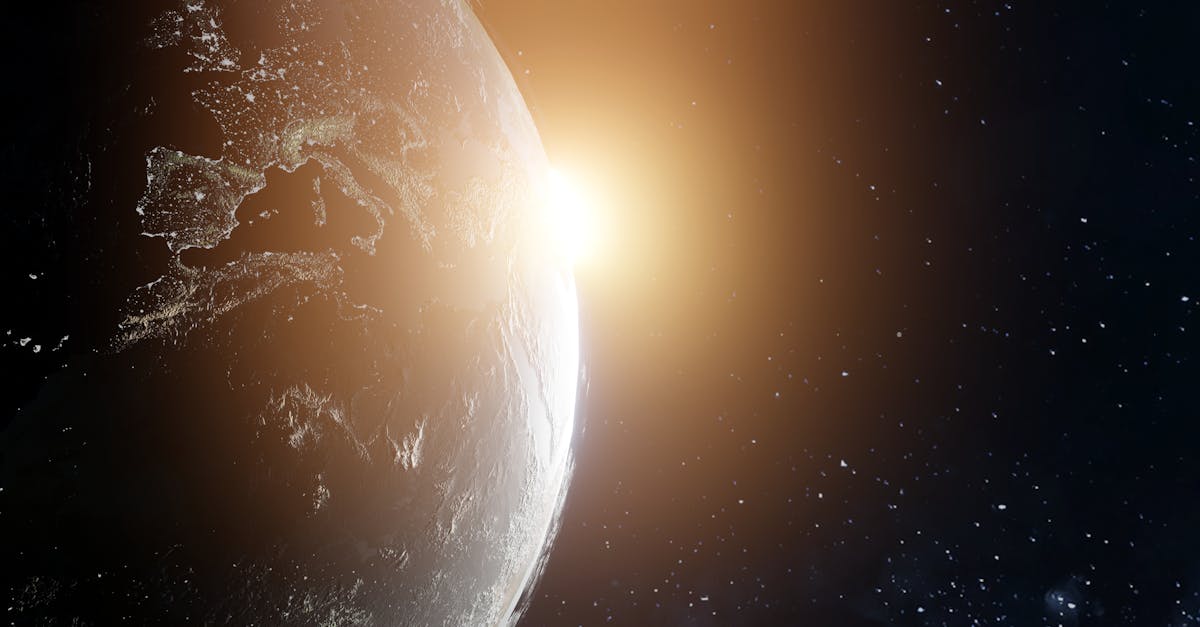
The light hitting your face right now left the Sun’s surface about eight minutes ago. But the photons themselves? They’re ancient—born in the Sun’s core tens of thousands of years before they ever reached the surface to begin that final sprint to Earth.
The short answer
Sunlight takes approximately 8 minutes and 20 seconds to travel from the Sun’s surface to Earth. The precise light travel time varies between 8 minutes 4 seconds and 8 minutes 30 seconds throughout the year, depending on Earth’s position in its elliptical orbit.
But that eight minutes is only the last leg of a much longer journey.
The journey starts thousands of years earlier
When you hear “sunlight takes 8 minutes to reach Earth,” that’s measuring surface-to-Earth only. The photon’s real journey begins deep in the Sun’s core, where nuclear fusion converts hydrogen into helium and releases energy as gamma-ray photons.
Those photons don’t shoot straight out. The Sun’s interior is incredibly dense—a chaotic maze of matter. Each photon travels a tiny distance before colliding with an atom, getting absorbed, and re-emitted in a random direction. It’s a drunkard’s walk through 700,000 kilometers of plasma.
This random-walk process takes 100,000 to 200,000 years. Only after wandering outward for millennia does a photon finally escape the Sun’s surface and make the comparatively quick 8-minute dash to Earth. The “age” of the sunlight warming your skin right now is older than human civilization.
The math: 8 minutes 20 seconds
Here’s how we calculate that final leg. The speed of light in a vacuum is a physical constant: 299,792.458 kilometers per second, as defined by the International Bureau of Weights and Measures. The average Earth-Sun distance is exactly 149,597,870.7 kilometers—one Astronomical Unit, or 1 AU, as defined by the International Astronomical Union.
Divide distance by speed:
149,597,870.7 km ÷ 299,792.458 km/s = 499 seconds = 8 minutes 19 seconds
Rounded to 8 minutes 20 seconds for most purposes. But that AU value—precise to the decimeter—wasn’t plucked from thin air.
How we nailed down the distance
Early estimates of the Earth-Sun distance were rough. Astronomers knew the proportions of the solar system from Kepler’s laws, but not the absolute scale. Finding one precise distance would calibrate everything else.
The breakthrough came from radar measurements to Venus in the 1960s. Scientists bounced radio waves off Venus, measured the round-trip time, and used the speed of light to calculate the distance. Since Venus’s orbital relationship to Earth was already known from geometry, this locked in the Earth-Sun distance with extraordinary precision.
That’s how we arrived at 149,597,870.7 km—a value so reliable that the IAU formalized it as the definition of the Astronomical Unit in 2012. The AU is no longer measured; it’s a fixed standard. Combined with the speed of light (also a defined constant since 1983), the light travel time calculation is exact.
You can verify Earth’s real-time distance from the Sun using NASA’s Horizons ephemeris system, which tracks planetary positions to within meters.
Why the time actually varies
Earth’s orbit is an ellipse, not a circle, so our distance from the Sun changes throughout the year.
In early January, Earth reaches perihelion—the closest point, about 147,098,290 km from the Sun. Sunlight reaches us in approximately 8 minutes 4 seconds.
Six months later, in early July, we swing out to aphelion—the farthest point, about 152,097,451 km away. Sunlight now takes about 8 minutes 30 seconds.
That’s a 26-second variation caused by roughly 5 million kilometers of distance change. Interestingly, Earth is closest to the Sun during Northern Hemisphere winter—proof that distance doesn’t cause seasons. (Axial tilt does the work.)
What this means for space weather forecasting

That 8-minute delay has a critical real-world consequence: there is no advance warning for solar flares.
When satellites like NASA’s Solar Dynamics Observatory detect a solar flare erupting on the Sun’s surface, that eruption already happened 8 minutes ago. The light showing the flare and the flare’s electromagnetic radiation are traveling together at the speed of light. By the time we see the flare, it has already reached Earth.
Ground warnings cannot be issued in advance. The event we’re observing is the event hitting us.
This constraint shapes how NOAA’s Space Weather Prediction Center monitors solar activity. For flares, the 8-minute delay is baked in—there’s no buffer. Coronal mass ejections (CMEs), which travel slower than light, offer a bit more lead time, but the initial detection of the eruption itself is always 8 minutes late.
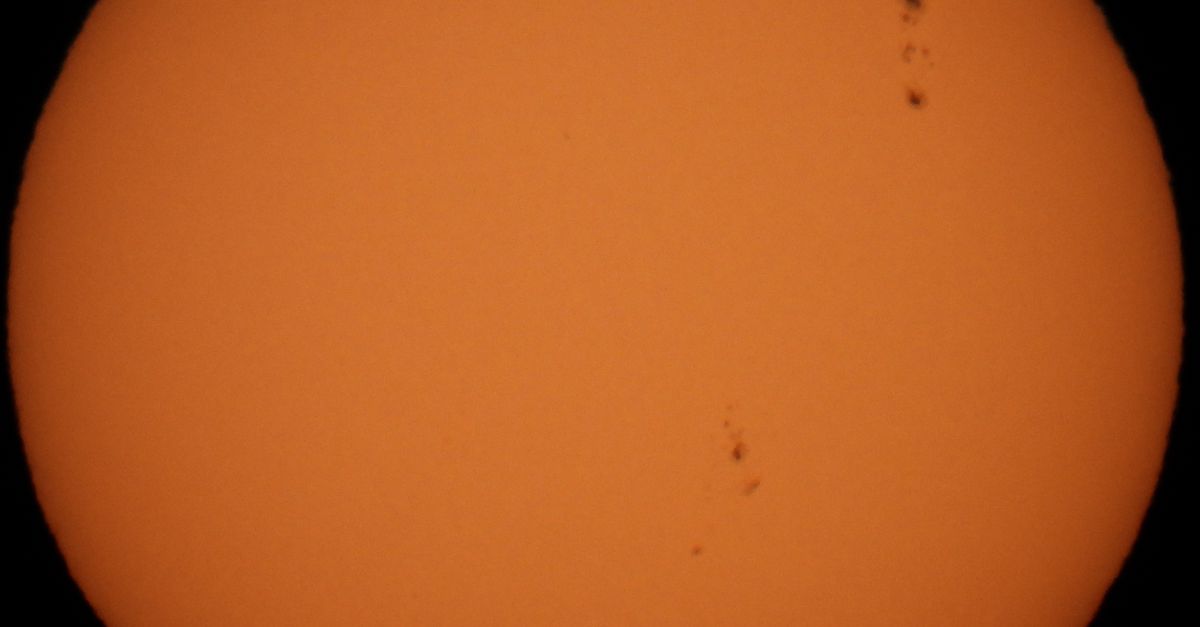
If you’ve ever observed the Sun through a solar telescope (with proper filters!), you’re seeing sunspots, prominences, and surface features as they were 8 minutes ago. They’ve already evolved by the time you see them.
The bigger picture
Understanding how long sunlight takes to reach Earth opens the door to grasping cosmic distances. If light from the Sun takes 8 minutes, light from Proxima Centauri takes 4.24 years. Andromeda’s light takes 2.5 million years. Every photon is a time capsule.
The fact that light has a speed limit—and that we can measure it to ten significant figures—is one of the anchoring truths of modern physics. When you look at the night sky, you’re not seeing the universe as it is now. You’re seeing a patchwork of history, each star and galaxy frozen at the moment its light began the journey to your eyes.
And it all starts with that 8-minute trip from the Sun’s surface—capping a 100,000-year odyssey from its core.
FAQ
Why doesn’t sunlight reach Earth instantly?
Light travels at a finite speed—the fastest speed possible in the universe, but still finite. At 299,792 km/s, covering 150 million kilometers between the Sun and Earth takes time, just like driving across a continent. Nothing can travel instantaneously.
Does the time change throughout the year?
Yes. Earth’s elliptical orbit means our distance from the Sun varies by about 5 million kilometers. At perihelion in early January, sunlight arrives in 8 minutes 4 seconds. At aphelion in early July, it takes 8 minutes 30 seconds.
Does this mean we see the Sun as it was 8 minutes ago?
Exactly. The sunlight entering your eyes left the Sun’s surface roughly 8 minutes earlier. Every observation of the Sun—with your eyes, a telescope, or a satellite—is a view into the recent past.
How long does it take light to get from the Sun’s core to the surface?
Between 100,000 and 200,000 years. Photons generated by fusion in the core undergo countless collisions and random-walk their way outward through the dense solar interior before finally escaping into space.
Once you’ve wrapped your head around Earth’s 8-minute light delay, the next question is obvious: how far does light travel across the entire universe? For that cosmic leap, see How Big Is the Universe? The Mind-Bending Scale Explained.
Written for general interest and accuracy-checked, but not a substitute for specialist sources.