
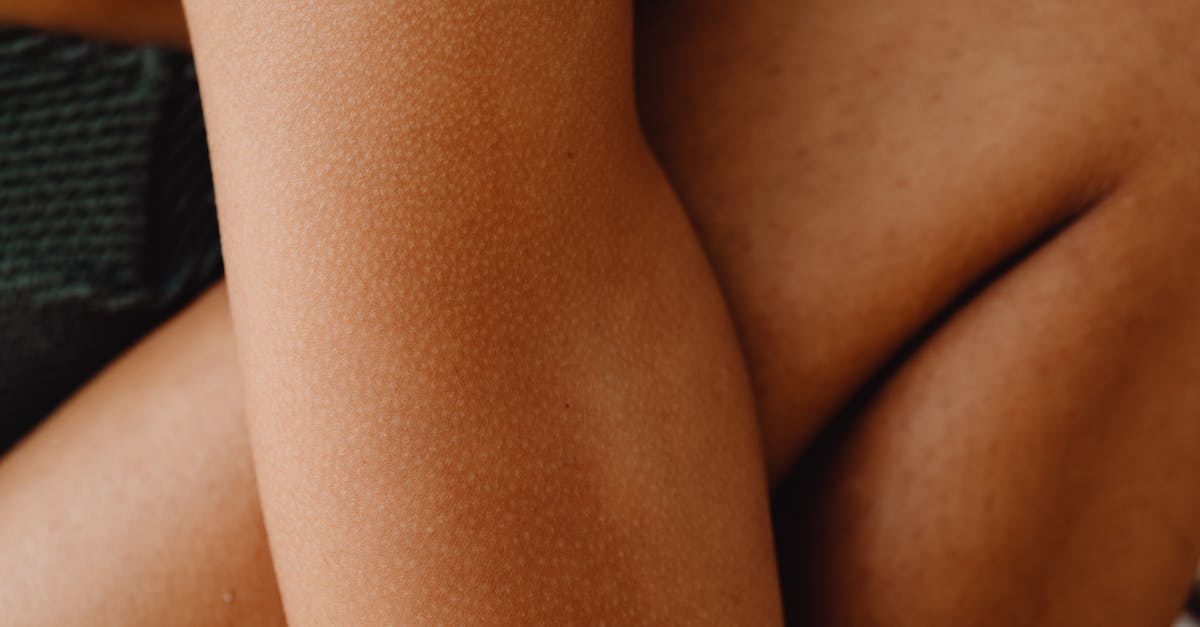
Humans are often called “the hairless ape,” but here’s the paradox: you have roughly 5 million hair follicles across your body — about the same number as a chimpanzee. The difference isn’t that we lost our body hair; it’s that most of our body hair became so fine and light that it’s barely visible. If we evolved away from thick fur, why did we keep body hair at all?
The short answer
We still have body hair because it serves real functions: sensory feedback (detecting touch and threats), minor protection against UV and friction, support for thermoregulation, and visual signaling of sexual maturity. Humans didn’t lose body hair — we evolved finer hair on most of the body while developing better cooling systems (sweat glands) that made thick fur unnecessary.
The “hairless” myth: we didn’t lose our hair follicles
When you compare human skin to chimpanzee skin under magnification, you’ll find a surprise: we have roughly the same density of hair follicles across most of our bodies. What changed during human evolution 2–3 million years ago wasn’t the number of follicles but the type of hair they produce.
Most of our body hair is vellus hair — fine, short, lightly pigmented strands that are nearly invisible from a distance. Chimps and gorillas grow terminal hair across their trunks and limbs: thick, dark, coarse strands that form visible fur. Humans retain terminal hair in specific regions (scalp, armpits, pubic area, and in many people, the chest, legs, and face), but shifted to vellus hair almost everywhere else.
This wasn’t a loss of hairiness. It was a shift in hair quality. The follicles stayed; the output changed. And because those follicles remain active, they still serve purposes that mattered enough to evolution to stick around.
What body hair still does for you

Sensory feedback you don’t consciously notice
Each hair follicle connects to nerve endings that detect movement. When something brushes against your arm or a mosquito lands on your leg, the hair moves slightly before your skin is touched, giving your nervous system an early-warning signal. This is why you can sometimes feel an insect on your arm before it bites, or sense air currents and nearby movement even with your eyes closed.
Shaving removes this sensory layer. People who shave their legs or arms often report feeling “less aware” of light touch in those areas — that’s the loss of hair-mediated sensory feedback. It’s subtle, but it’s measurable. Your body hair is part of your sense of touch.
Minor but real physical protection
Body hair offers modest protection against:
- UV radiation: Hair scatters and absorbs some UV light before it reaches skin. This protection is minor compared to sunscreen, but it’s not zero — scalp hair, for instance, significantly reduces UV exposure to the scalp.
- Friction: Hair on the thighs, underarms, and groin reduces skin-on-skin chafing during movement.
- Particulates and insects: Arm and leg hair can trap or deflect small debris, and eyebrows specifically channel sweat and rain away from the eyes (a function so useful that eyebrows remained thick across human populations).
None of these functions are critical for survival in modern life, but they were advantageous enough in our evolutionary past to maintain the trait.
Thermoregulation support
Humans rely primarily on sweating for cooling — we’re the best endurance runners in the animal kingdom partly because we can dump heat through evaporative cooling while running. Thick fur would trap heat and interfere with sweating, which is why we evolved finer body hair on the trunk and limbs.
But body hair still plays a supporting role in temperature regulation. In cold environments, piloerection (the reflex that causes goosebumps) makes body hair stand upright, trapping a thin insulating layer of air against the skin. This mechanism is much less effective in humans than in furry mammals, but it persists because it provides some benefit at essentially no metabolic cost.
Sexual maturation signaling
The body hair you grow after puberty — particularly facial hair, chest hair, and pubic hair — is androgen-dependent, meaning it responds to hormones like testosterone and DHT. This type of hair is thicker, darker, and more visible than childhood vellus hair, and it appears specifically during and after sexual maturity.
Across human cultures, visible body hair has been interpreted as a signal of adulthood and reproductive maturity. This doesn’t mean hairiness is universally attractive (cultural beauty standards vary wildly), but it does mean that the biological function of post-puberty body hair includes signaling developmental stage. Evolution kept these visible hair patterns because they conveyed useful social and reproductive information.
Why body hair varies so much between people

If you’ve ever wondered why some people are visibly hairy and others are nearly hairless, the answer is: genetics and hormones account for most of the variation, and it’s completely normal across the range.
Ethnic and ancestral differences are significant. People of East Asian descent tend to have finer, sparser body hair overall. People of Mediterranean, South Asian, Middle Eastern, and some European ancestries often have denser, darker body hair. These differences reflect thousands of years of adaptation to different climates and are neutral variations — neither more nor less “evolved.”
Sex differences are driven by androgens. People with higher androgen levels (typically but not exclusively males) grow more terminal body hair on the chest, abdomen, face, and limbs after puberty. But everyone has the follicles; androgen exposure determines how much visible hair they produce.
Individual variation within any population is massive. Two people of the same ancestry and sex can have visibly different amounts of body hair due to genetic variation in androgen receptor sensitivity, follicle density, and hair growth cycles. There is no single “normal” amount of body hair.
Conditions like polycystic ovary syndrome (PCOS), thyroid disorders, and certain medications can increase or decrease body hair growth, but for most people, the amount of hair they have is simply their genetic baseline.
The evolutionary trade-off: why we went from fur to finer hair
Around 2–3 million years ago, early humans in the genus Homo began evolving more sweat glands and finer body hair. The leading theory is that this shift gave us a critical advantage: endurance hunting in hot, open environments.
Thick fur would have trapped heat and made sweating less effective. By shifting to finer hair and ramping up sweat gland density, early humans could run long distances in the midday sun without overheating — an ability almost no other mammal has. Prey animals would overheat and collapse; human hunters could keep going.
But shedding thick fur came with trade-offs. We lost some insulation, some UV protection, and some sensory surface area. The solution wasn’t to eliminate hair entirely; it was to keep the follicles, produce finer hair where thick fur was no longer useful, and retain thick terminal hair where protection and signaling still mattered (scalp, face, armpits, groin).
This is why calling humans “hairless” is misleading. We’re not hairless. We’re strategically fine-haired, with thicker hair retained in the places where it still pulls its weight.
FAQ
Why did humans lose body hair?
Humans didn’t lose body hair — we still have about 5 million hair follicles. What changed is that most of our body hair became very fine (vellus hair) rather than thick and dark (terminal hair). This shift happened 2–3 million years ago, likely to improve sweat-based cooling for endurance activities in hot climates as early humans adapted to open environments.
Do all humans have the same amount of body hair?
No. Body hair density and visibility vary widely by genetics, ancestry, sex, and hormone levels. People of East Asian descent tend to have sparser body hair, while Mediterranean and South Asian populations often have denser, darker hair. Individual variation is also significant — genetics and hormones account for most of the differences you’ll see.
What is the purpose of body hair?
Body hair provides sensory feedback (detecting touch and air movement before skin contact), minor UV and friction protection, thermoregulation support through piloerection, and visual signaling of sexual maturity. These functions are no longer critical for survival, but they were advantageous enough evolutionarily to maintain the trait.
Is body hair a sign of evolution?
Body hair isn’t a sign of being “more” or “less” evolved — it’s an ancestral trait all humans retain. The variation in body hair type (fine vs. coarse) and density reflects adaptations to different environments and is biologically neutral. Having visible body hair is normal and shared by all human populations to varying degrees.
Why do some people have more body hair than others?
Genetics, hormone levels, ancestry, and sex are the main factors. Androgens like testosterone increase terminal body hair growth, which is why body hair often becomes more visible after puberty and why males typically have more visible body hair. Genetic variation in androgen receptor sensitivity also plays a major role, and certain medical conditions or medications can affect hair growth.
Body hair is one of those features we rarely think about until we’re shaving it off or noticing it on someone else — but it’s been with us for millions of years, doing quiet, useful work. We didn’t lose it when we evolved finer coats because it still had jobs to do: sensing, protecting, signaling. The fact that modern humans choose to remove it for cultural or aesthetic reasons doesn’t change its biology. You still have those 5 million follicles, and they’re still connected to the same evolutionary story that made us the endurance specialists of the animal kingdom.
Written for general interest and accuracy-checked, but not a substitute for specialist sources.