

When researchers at the University of Michigan scanned patients’ brains while giving them a placebo painkiller, they expected to see… nothing. Instead, PET imaging revealed something startling: the patients’ brains were flooding their own pain centers with endogenous opioids — the body’s natural morphine — in response to a sugar pill. The pain relief wasn’t imaginary. The neurochemistry was as real as if they’d swallowed an actual drug.
The short answer
The placebo effect is a measurable physiological response to an inert treatment — your brain releases real pain-dampening chemicals, activates specific neural pathways, and reduces symptom intensity by roughly 30–40% on average, even when you know you’re taking a placebo. It works through expectation triggering neurochemical cascades, not through “mind over matter” mysticism or self-deception.
It’s not fake — it’s brain chemistry you can photograph
For decades, placebo was dismissed as psychosomatic static, the noise you filter out to find the “real” drug effect. Then neuroscientists started looking inside the skulls of people experiencing placebo analgesia.
Benedetti and colleagues (2005) used PET scans to track what happens when patients expect pain relief. The scans lit up: the brain’s reward system released dopamine into the striatum, and opioid receptors activated in the same regions that morphine targets — the anterior cingulate cortex and the anterior insula. When researchers blocked those opioid receptors with naloxone (a drug that reverses opioid overdoses), the placebo effect vanished. The conclusion was unavoidable: placebo analgesia operates through the same biological hardware as pharmaceutical painkillers, releasing the body’s endogenous opioids in response to expectation.
A 2002 study in Science confirmed the overlap, showing placebo and morphine activate overlapping brain regions for pain modulation. This isn’t about “feeling better because you believe you should.” It’s about belief triggering a real biochemical cascade that alters how your nervous system processes pain signals.
How expectation becomes chemistry: the three-part mechanism
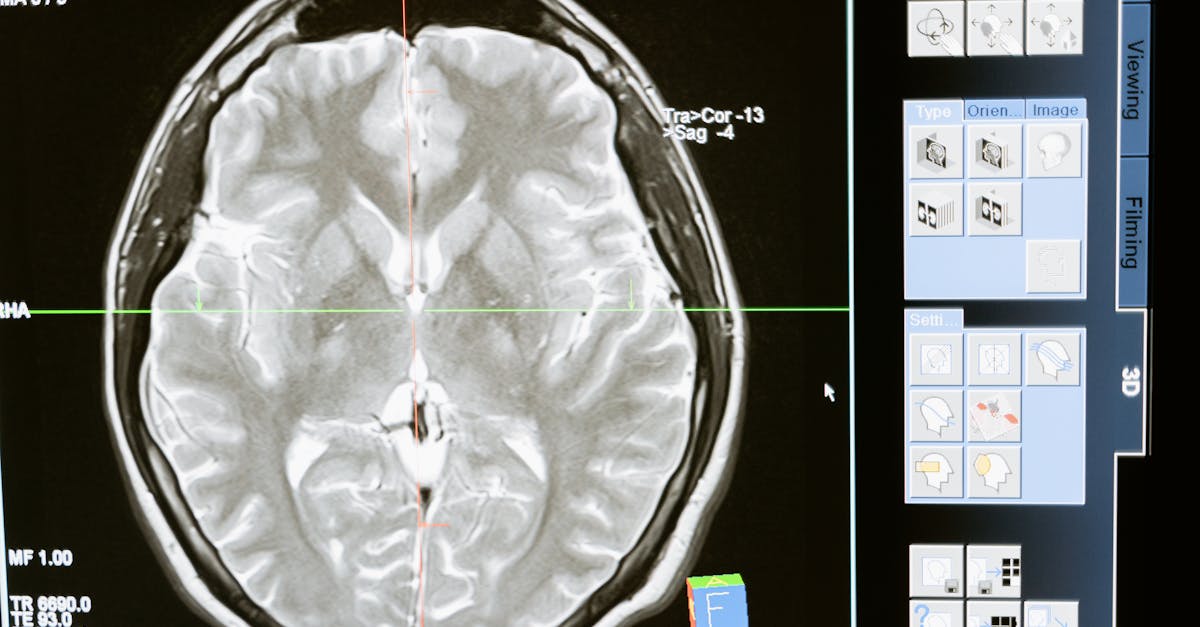
The placebo effect runs on three interlocking systems, all generating real physiological changes:
Expectancy. When you anticipate relief — because a doctor hands you a pill, because you trust the ritual, because the treatment looks expensive or high-tech — your prefrontal cortex primes your pain-processing regions to dampen incoming signals. Brain imaging shows this anticipatory activity before you even feel symptom relief. Expectation is not hope; it’s a neural prediction that your brain treats as information worth acting on.
Conditioning. If you’ve taken a painkiller before and felt relief, your nervous system learns the association: pill → reduced pain. After enough repetitions, the ritual alone (swallowing the pill, the clinical setting, the chalky taste) can trigger the learned response even if the pill contains no active drug. This is Pavlovian conditioning applied to symptom relief, and research shows it amplifies placebo effects significantly — patients with prior positive treatment experiences show stronger placebo responses than treatment-naive patients.
Neurochemical release. The expectation and conditioning don’t just change your mood; they flip biochemical switches. Your brain synthesizes and releases endogenous opioids (endorphins and enkephalins), dopamine, and even anti-inflammatory molecules like cortisol in response to the placebo. These are the same substances pharmaceutical drugs aim to boost or mimic. The difference is the trigger: instead of a molecule from a lab, it’s a learned expectation firing the release.
The open-label twist: you don’t need to be fooled
Here’s where the myth collapses entirely. For decades, the prevailing belief was that placebo only works if patients are deceived — if they think they’re getting real medicine. Then researchers tried something audacious: they told patients explicitly, “This is a placebo. It contains no active drug. But studies show it can help anyway.”
A 2020 trial published in Nature Medicine gave irritable bowel syndrome patients open-label placebos — pills clearly marked “placebo” with full disclosure that they were inert. The patients knew. And yet, symptom scores improved comparably to those taking undisclosed placebos, and significantly better than untreated controls.
Why does it work when you know it’s fake? Because the placebo effect doesn’t require deception; it requires context and ritual. The act of taking a pill at a set time, the therapeutic relationship with a clinician, the learned association between “treatment” and “relief” — these cues are enough to activate the expectancy and conditioning pathways. Your conscious knowledge that it’s inert doesn’t override the deeper, automatic processes your nervous system has learned. Think of it like an optical illusion: you know the lines are the same length, but your visual system still sees them as different. Placebo is a neurological illusion your body enacts even when your rational mind knows better.
What placebo can — and critically, cannot — do

Placebo works robustly for subjective symptoms where the brain modulates perception: pain, nausea, fatigue, and itching. Clinical trials show placebo analgesia reduces moderate pain intensity by roughly 30–40% on standardized scales — a genuine, reproducible effect. Placebo also damps nausea (which is why it’s effective in motion sickness contexts) and reduces the perception of breathlessness in asthma patients (though it doesn’t improve actual lung function).
But placebo does not fix objective, tissue-level disease. A comprehensive Cochrane review analyzing 192 trials found placebo had no effect on mortality, infection rates, wound healing, or fracture repair. It won’t lower your blood glucose if you’re diabetic, won’t shrink a tumor, won’t knit a broken bone. Placebo modulates how intensely you experience symptoms; it doesn’t reverse the underlying pathology causing them.
This distinction matters enormously. Placebo can be a valuable adjunct — reducing the suffering from cancer pain, for instance, alongside real oncology treatment — but it’s not a substitute for evidence-based medicine when the disease is life-threatening or structurally damaging. The risk is mistaking symptom relief for cure.
The ritual amplifies the response
Placebo magnitude isn’t fixed; context shapes it. Studies consistently show that larger pills produce stronger placebo effects than small ones. Brightly colored pills (red, orange) are perceived as stimulants; blue and green pills as calming. Injections beat pills. Expensive-looking packaging beats generic. A warm, confident clinician explaining the treatment beats a rushed, impersonal handoff.
None of this is conscious manipulation on the patient’s part. These contextual cues feed into the expectancy system: your brain uses them as evidence that “this treatment is powerful,” and that prediction becomes a self-fulfilling neurochemical event. The therapeutic ritual — the reassurance, the authoritative setting, the sensory trappings of care — turns out to be pharmacologically active.
FAQ
Can a placebo work if you know you’re taking one?
Yes. Open-label placebo trials prove that explicit knowledge of receiving an inert treatment doesn’t eliminate the effect. The ritual, expectation, and conditioning still activate neurochemical pathways even when you’re fully aware there’s no active drug.
Is the placebo effect real science, or just psychology?
It’s both, and the division is artificial. Placebo produces measurable brain activity, neurotransmitter release, and changes in pain signaling visible on PET and fMRI scans. Psychology (expectation, belief) is the trigger; neurobiology is the mechanism. Calling it “just” psychology dismisses the physical reality of what the brain does in response to that psychology.
What conditions can placebos actually treat?
Placebo works best for subjective, perception-based symptoms: pain, nausea, itch, fatigue. It has minimal to no effect on objective outcomes like infection clearance, tumor shrinkage, bone healing, or metabolic disease. It’s a genuine tool for symptom management, not disease cure.
The placebo effect is not proof that “it’s all in your head” — it’s proof that what’s in your head has biochemical consequences your body enacts. The line between mind and matter blurs when expectation becomes endorphins, when ritual becomes pain relief, and when a sugar pill triggers the same neural pathways as morphine. The mystery isn’t whether it works. The mystery is that we spent so long dismissing it as noise instead of recognizing it as signal.
Written for general interest and accuracy-checked, but not a substitute for specialist sources.