

Only six of the 18 penguin species actually live in Antarctica. The rest swim off the coasts of Peru, Chile, South Africa, and New Zealand — some in water warmer than 20°C. If you pictured all penguins on ice when you read “penguin,” you’re not alone, but you’re working from incomplete information.
Penguins are real animals with wildly different lifestyles, not the monolithic tuxedo-bird of nature documentaries. Here’s what the science actually says, with the myths stripped out.
1. There are 18 penguin species, not one uniform bird
Most people can name Emperor and maybe Adelie penguins. The Smithsonian National Zoo and BirdLife International recognize 17–18 distinct species (the count shifts slightly with taxonomic updates), including Rockhopper, Macaroni, Chinstrap, Gentoo, Yellow-eyed, African, Humboldt, Magellanic, Little, and others.
They range from the 3.6-foot-tall Emperor — weighing up to 88 pounds — down to the Little Penguin, which stands just 13 inches and weighs 2.2 pounds. That’s roughly the size difference between a golden retriever and a teacup Chihuahua. They don’t all waddle on ice, eat the same food, or face the same threats. Treating “penguins” as one animal erases the actual biology.
2. Most penguin species don’t live in Antarctica
Six species breed on Antarctic ice or nearby sub-Antarctic islands: Emperor, Adelie, Chinstrap, Gentoo, Macaroni, and Rockhopper. The other twelve live in temperate or even warm climates.
African penguins nest on South African beaches where summer air temperatures hit 30°C. Humboldt and Magellanic penguins breed along the coasts of Peru and Chile. Galápagos penguins live at the equator. The Yellow-eyed penguin — one of the rarest — breeds only in New Zealand’s coastal forests.
The “penguins on ice” stereotype persists because nature documentaries favor Antarctic footage. It’s visually dramatic, but it’s also statistically misleading. Most penguin species never see pack ice.
3. Penguins didn’t lose the ability to fly — they traded it for underwater speed
Flightlessness isn’t a defect. Around 50 million years ago, penguin ancestors evolved from flying seabirds and began specializing for diving. Over millions of years, their wings shortened and stiffened into flippers, their bones became denser (reducing buoyancy), and their bodies streamlined for hydrodynamics.
The result: penguins “fly” underwater with far superior efficiency compared to their diving ancestors. Research published in the Proceedings of the National Academy of Sciences frames this as an evolutionary trade-off, not a loss — penguins sacrificed aerial mobility for dramatically improved underwater propulsion. Their flippers generate lift and thrust the same way a bird’s wings do in air, just in a denser medium.
They are not broken birds. They are optimized divers.
4. Swimming speed depends entirely on species and context
“How fast do penguins swim?” has no single answer. Gentoos cruise at around 4–5 mph but can sprint at 22 mph in short bursts — the fastest of all penguin species. Emperor penguins swim 7–12 mph in open water. Rockhoppers and Little Penguins stay closer to 3–5 mph.
NOAA Fisheries telemetry studies show that most penguins spend the majority of their time swimming well below their maximum speed — cruising to conserve energy, sprinting only when chasing prey or fleeing predators. Citing the maximum speed as “the speed penguins swim” is like saying humans run 28 mph because Usain Bolt did it once.
Context matters: water temperature, prey density, and whether the penguin is traveling or actively hunting all affect speed.
5. Penguin lifespan is a wide, unstable range
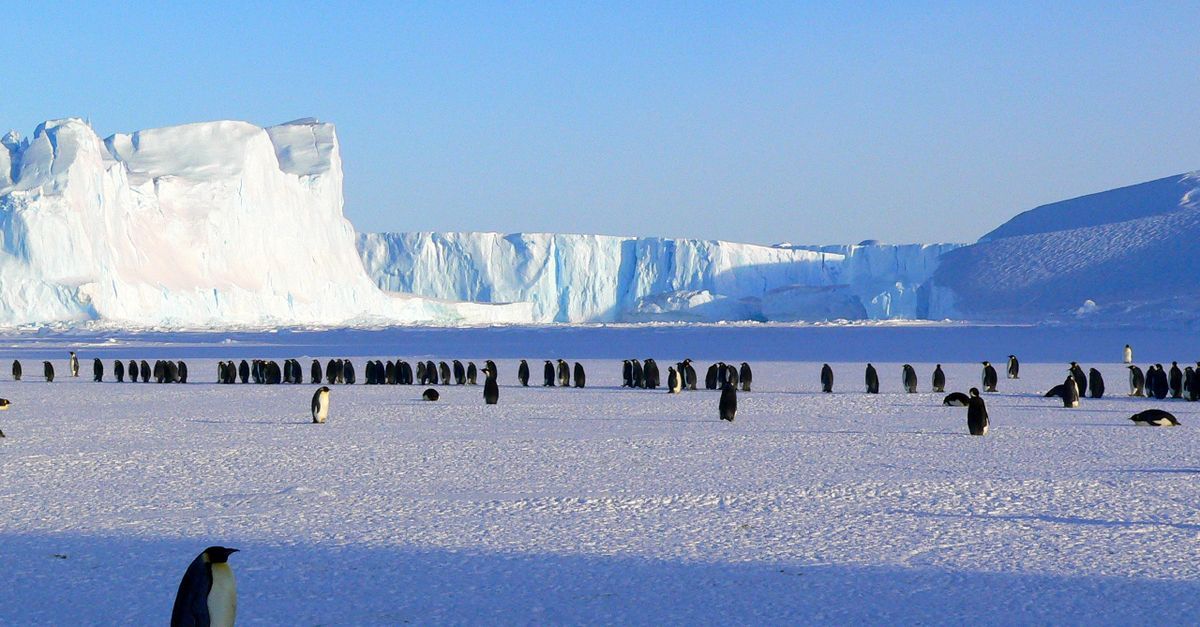
Small species like Little Penguins and Rockhoppers live 6–10 years in the wild. Medium-sized species like Chinstrap and Adelie reach 15–20 years. Emperors live 15–20 years on average, with some individuals reaching 30+ years in captivity (the Australian Antarctic Division tracks these records closely).
But lifespan is not fixed. A penguin born during a year of abundant prey and stable ice may live two decades. One born during an El Niño event — when warm water disrupts fish populations — may starve before age five. Breeding success, ice extent, predation, and food availability all dictate how long an individual penguin survives.
Captive penguins live longer because those variables disappear. Wild penguins don’t get that stability.
6. Penguin diet is 100% animal — and krill is overrepresented
Penguins are carnivores. They eat fish, squid, and crustaceans. No kelp, no algae, no plant matter.
But if you’ve heard “penguins eat krill,” you’re thinking of one species. Adelie penguins consume roughly 60% krill. Emperors eat less than 5% krill — their diet is dominated by Antarctic silverfish, lanternfish, and squid. African penguins hunt sardines and anchovies. Humboldt penguins target anchovies and squid.
According to NOAA’s Antarctic Ecosystems Research, krill is a significant food source only for species that forage in the Southern Ocean’s upper water column. Deep-diving species like the Emperor skip krill entirely — it’s too small and energy-poor for the calories they burn on 10-minute dives to 1,000+ feet.
Saying “penguins eat krill” flattens 18 species into one diet. It’s wrong.
7. Emperor penguins are the deep-diving extremists
Emperors hold the penguin dive record: 1,849 feet (563 meters), lasting over 27 minutes. Most of their hunting dives reach 1,000–1,800 feet and last 6–12 minutes.
How? Their lungs collapse under pressure, forcing oxygen out of air spaces and into their blood and muscles. They carry extra myoglobin — the oxygen-binding protein that makes meat red — in their muscles, and their spleens release stored red blood cells mid-dive to boost oxygen capacity. They switch to anaerobic metabolism when oxygen runs low, tolerating lactic acid buildup that would incapacitate most animals.
Adelie penguins, by contrast, average around 175-foot dives and max out near 275 feet. Emperors didn’t just evolve to survive the coldest breeding grounds on Earth — they evolved to hunt in a vertical range no other penguin can reach. If you’re comparing penguin species, you’re comparing different niches, not variations on a theme.
8. Huddling isn’t just cute — it’s a calculated energy savings

Emperor penguins breed on Antarctic pack ice in the middle of winter, when temperatures drop to −40°C and wind speeds hit 90 mph. Males incubate eggs for 64 days straight without eating, losing up to 45% of their body weight.
They survive by huddling in groups of 4,000–6,000 individuals, rotating from the wind-blasted edge to the warm core. Research published in Nature shows that penguins in the huddle core maintain a body temperature of 37°C while those on the edge experience surface temperatures near −20°C. The huddle reduces each penguin’s energy expenditure by roughly 20% compared to standing alone.
This isn’t social behavior for comfort. It’s a thermal strategy that makes winter breeding physically possible. Without it, Emperor penguins would need to eat during incubation — and there’s no food accessible on the ice.
9. Not all penguin species are thriving — but the decline isn’t uniform
Nine of the 18 penguin species are classified as Endangered or Vulnerable by the IUCN Red List. Yellow-eyed penguins number around 4,000 individuals globally. According to the IUCN Red List, African penguin populations are in steep decline. Galápagos penguin numbers hover near 1,200.
But not every species is collapsing. Some Adelie colonies in East Antarctica remain stable. Gentoo populations are growing in parts of the Antarctic Peninsula as waters warm and ice retreats — they’re benefiting from the same changes that hurt Emperor and Chinstrap penguins.
Climate, overfishing, oil spills, and introduced predators (rats, cats, dogs on nesting islands) all hit different species differently. There’s no single “penguin crisis” — there are 18 separate species with 18 separate futures.
10. Penguins have the densest feather coat of any bird
Penguins pack roughly 100 feathers per square inch — denser than any other bird. For comparison, most songbirds have around 25–30 feathers per square inch. The feathers overlap in multiple layers, trapping air for insulation and creating a waterproof barrier when coated with oil from the preen gland.
A penguin’s feathers aren’t just insulation. They’re also streamlining. The smooth outer layer reduces drag underwater, and the air trapped between layers provides buoyancy control — penguins can adjust how much air they hold to fine-tune their depth.
They molt all their feathers at once each year (called a “catastrophic molt”), spending 2–3 weeks on land while the new coat grows in. During that time, they can’t swim or hunt — they live off stored fat. It’s one of the most vulnerable periods in a penguin’s year, and it happens like clockwork.
How we ranked these facts
These aren’t the ten most obscure or dramatic penguin facts — they’re the ten that correct the most common misunderstandings. We prioritized facts that people confidently get wrong (Antarctica-only range, krill-only diet, flightlessness as failure) over trivia that’s just fun. Every claim here is backed by peer-reviewed research or data from institutions like NOAA, Smithsonian, and the Australian Antarctic Division.
Frequently asked questions
Why can’t penguins fly?
They can — just underwater. Penguins evolved from flying ancestors roughly 50 million years ago and traded aerial flight for superior underwater propulsion. Their wings became stiff, paddle-like flippers, and their bones became dense to reduce buoyancy. This wasn’t a loss; it was specialization for a different environment.
How fast do penguins swim?
It depends on the species. Gentoo penguins can hit 22 mph in bursts. Emperors cruise at 7–12 mph. Smaller species like Rockhoppers swim closer to 3–5 mph. Most penguins spend the majority of their time well below their maximum speed, conserving energy for hunting and migration.
What do penguins eat?
All penguins are carnivores. Diet varies by species: Adelies eat mostly krill, Emperors target fish and squid, African penguins hunt sardines and anchovies. There is no universal “penguin diet” — each species is adapted to the prey available in its range.
How long do penguins live?
Lifespan ranges from 6–10 years for small species like Little Penguins to 15–20 years for Emperors and Adelies. Captive penguins can live 30+ years. In the wild, lifespan depends heavily on food availability, predation, and breeding success in any given year.
Penguins aren’t a monolith. They’re a family of 18 species that swim in oceans from the equator to the Antarctic, hunt different prey, live radically different lifespans, and face radically different futures. If you want to understand them, start by forgetting the cartoon version. For more on extreme animal adaptations, see What Animals Live in Earth’s Coldest Places?.
Written for general interest and accuracy-checked, but not a substitute for specialist sources.