
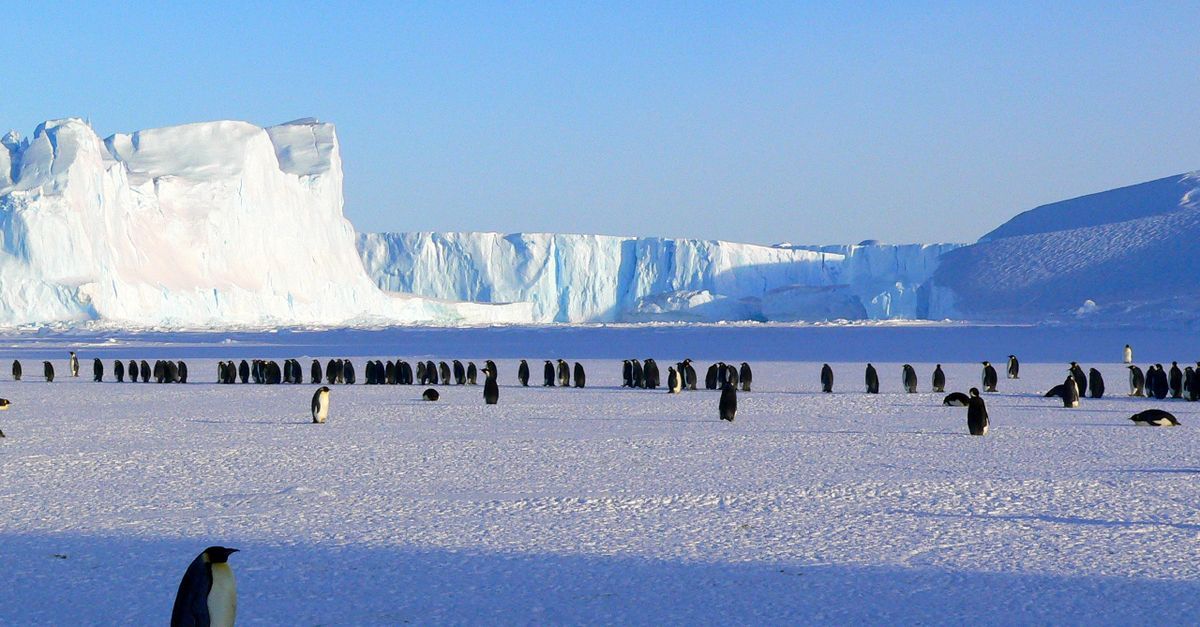
Emperor penguins routinely survive air temperatures of –40°C (–40°F) while maintaining a core body temperature of 37–38°C (98–100°F). They accomplish this in one of Earth’s harshest environments, standing on Antarctic ice for months during breeding season with no food and no shelter.
The short answer
Penguins don’t freeze because of three key penguin adaptations working together: an exceptionally dense feather system that does most of the insulating work, a counter-current heat exchange system in their blood vessels that prevents heat loss from extremities, and coordinated huddling behavior that dramatically reduces energy expenditure. Together, these systems are so efficient that they’ve never been matched by any other animal on Earth.
The feather myth you need to unlearn
If you’ve heard that penguin blubber keeps them warm, that’s only partly true—and it misses the main story.
Penguin feathers do the vast majority of the insulation work. Penguins have the densest plumage of any bird on Earth: about 100 feathers per square inch, roughly two to three times denser than most waterfowl. Each feather attaches to a tiny muscle that lets the penguin adjust how tightly the feathers press against the body, controlling how much air gets trapped in the gaps.
That trapped air is the actual insulator. The feathers themselves are just the scaffolding holding the air in place. Below the outer layer of waterproof feathers sits a dense down layer that creates thousands of tiny air pockets. Air is a terrible conductor of heat, so those pockets form a thermal barrier between the penguin’s warm body and the freezing air or water outside.
According to NOAA’s Antarctic research programs, this feather system alone allows emperor penguins to maintain their core temperature even when immersed in water near 0°C (32°F) or standing in air well below –40°C.
Blubber plays a secondary role. Most emperor penguins carry a blubber layer 1–2 inches (2.5–5 cm) thick, which provides backup insulation. Blubber’s real job is energy storage: emperor penguins fast for months during the breeding season, surviving entirely on stored fat. It also provides buoyancy and streamlining for diving.
This distinction matters. When oil spills coat penguin feathers, the birds lose their primary defense against the cold. Blubber alone isn’t enough to compensate, which is why oiled penguins can die of hypothermia even in milder conditions.
The blood vessel trick that saves their flippers

Penguin legs and flippers have almost no insulation—no thick feathers, very little blubber. Left unprotected, these extremities would hemorrhage heat into the environment. Instead, penguins use a system called counter-current heat exchange, and it’s elegantly simple.
Arteries carrying warm blood from the heart to the flippers run right alongside veins carrying cold blood back from the flippers. The two blood flows travel in opposite directions (hence “counter-current”), bundled close together. As warm arterial blood heads out toward the cold flipper, it transfers heat to the cold venous blood heading back toward the heart. By the time the arterial blood reaches the flipper, it’s already been cooled down, so less heat escapes into the environment. Meanwhile, the venous blood gets pre-warmed before it re-enters the core, preventing the returning cold blood from chilling the penguin’s internal organs.
This system, documented in thermoregulation studies, significantly reduces heat loss from flippers and legs—often cutting it by half or more. Without it, emperor penguins would lose so much heat through their extremities that even the world’s best feathers wouldn’t save them.
Why don’t penguins freeze when they huddle?
Huddling isn’t just penguins standing close together. It’s a coordinated rotation system that emperor penguins use to survive Antarctic winter while incubating eggs.
Thousands of male emperor penguins pack together in tight formations. The center of the huddle is noticeably warmer than the edge—sometimes by 10–15°C. But rather than let the lucky penguins in the middle stay there, the huddle constantly rotates. Every 20–30 seconds, penguins on the cold outer edge shuffle inward, and penguins in the warm center move outward to take their turn at the perimeter.
This rotation pattern was captured in detail by Antarctic researchers using thermal imaging, published by Zitterbart and colleagues in Biology Letters. The system is remarkably fair: every penguin gets periodic relief from the coldest exposure, and no individual bears the brunt of heat loss for too long.
The metabolic payoff is significant. Huddling dramatically reduces each penguin’s heat loss compared to standing alone in the same conditions. Over weeks or months of fasting in –40°C temperatures, that energy savings can mean the difference between surviving the breeding season and starving before the chick hatches.
Adelie and Chinstrap penguins also huddle, but less intensively. Emperor penguins are the extreme case because they breed during the Antarctic winter—the only warm-blooded animal on Earth that does so.
How the system works together

No single adaptation would be enough on its own. If you took away the feathers but kept the blubber and huddling, the penguin would freeze. If you kept the feathers but removed the counter-current heat exchange, the penguin would lose too much warmth through its flippers. If you eliminated huddling behavior, solitary emperor penguins would burn through their fat reserves too quickly to survive the long breeding fast.
The adaptations are interdependent. The feather system provides the bulk of the insulation. The counter-current heat exchange prevents the weak points (extremities) from leaking heat. Blubber provides backup insulation and, critically, the energy reserve needed to survive months without food. Huddling behavior stretches those energy reserves far enough to make it through winter. And beneath it all, emperor penguins have black skin under their feathers, which absorbs solar radiation during the brief periods when the sun appears, adding passive heating.
These systems evolved together over millions of years, tuned to let emperor penguins exploit a niche—breeding on Antarctic ice in winter—that no other animal can occupy.
Not all penguins are cold-weather champions
Emperor penguins are the most cold-adapted, but penguin species vary widely in where they live and what temperatures they tolerate:
| Species | Temperature Range | Habitat | Notes |
|---|---|---|---|
| Emperor | Down to –40°C (–40°F) | Antarctic ice | Breed during Antarctic winter |
| Adelie & Chinstrap | –10°C to 0°C (14°F to 32°F) | Antarctic & sub-Antarctic | Less extreme than emperors |
| Little (Fairy) | Temperate | Australia & New Zealand | Adapted to mild coastal climates |
If you see a claim that “penguins survive –40°C temperatures,” check which species is being discussed. Emperors can do it. Most other penguins cannot.
FAQ
Do penguins have blubber or fat?
Yes, penguins have a blubber layer typically 0.5–2 inches thick, depending on species and season. But blubber provides only secondary insulation—feathers do the heavy lifting. Blubber’s main role is storing energy for long fasts during breeding.
How do penguins stay warm in water?
The same feather insulation that works in air also works underwater. The feather layers trap air pockets even when the penguin dives, creating a barrier between the penguin’s skin and the near-freezing seawater. The air pockets compress slightly under water pressure, reducing efficiency a bit, but the system remains highly effective.
Can penguins freeze to death?
Rarely. Emperor penguins’ adaptations are so effective that freezing is uncommon even at –40°C. However, catastrophic scenarios—such as injury preventing movement, starvation depleting energy reserves, or oil coating the feathers—can overwhelm their defenses and lead to hypothermia.
What is counter-current heat exchange?
It’s a circulatory arrangement where warm arterial blood flowing out to the flippers runs alongside cold venous blood returning from the flippers. Heat transfers from the outgoing warm blood to the incoming cold blood, warming the blood before it reaches the heart and cooling the blood before it reaches the extremities. This minimizes heat loss effectively.
Do all penguin species live in cold places?
No. While emperor and Adelie penguins live in Antarctica, other species inhabit much milder climates. Little penguins live on the temperate coasts of Australia and New Zealand, and Galapagos penguins live near the equator. The “penguins only live in freezing cold” image is a myth.
Emperor penguins survive conditions that would kill most warm-blooded animals, not through one spectacular trick but through a tightly coordinated system of feathers, blood flow, fat reserves, and collective behavior. It’s an evolutionary masterpiece, and it works because every piece depends on the others. If you want to see a similar energy-saving collective strategy in action, check out Why Do Birds Fly in Formation? The Physics Behind the V—different species, same principle of cooperation under pressure.
Written for general interest and accuracy-checked, but not a substitute for specialist sources. Penguin biology and cold-weather physiology are complex subjects; consult peer-reviewed research for deeper dives.